
Falling into the trap of narrow calculations: How did Macron implicate France in his hostility towards Algeria and his internal dysfunctions?
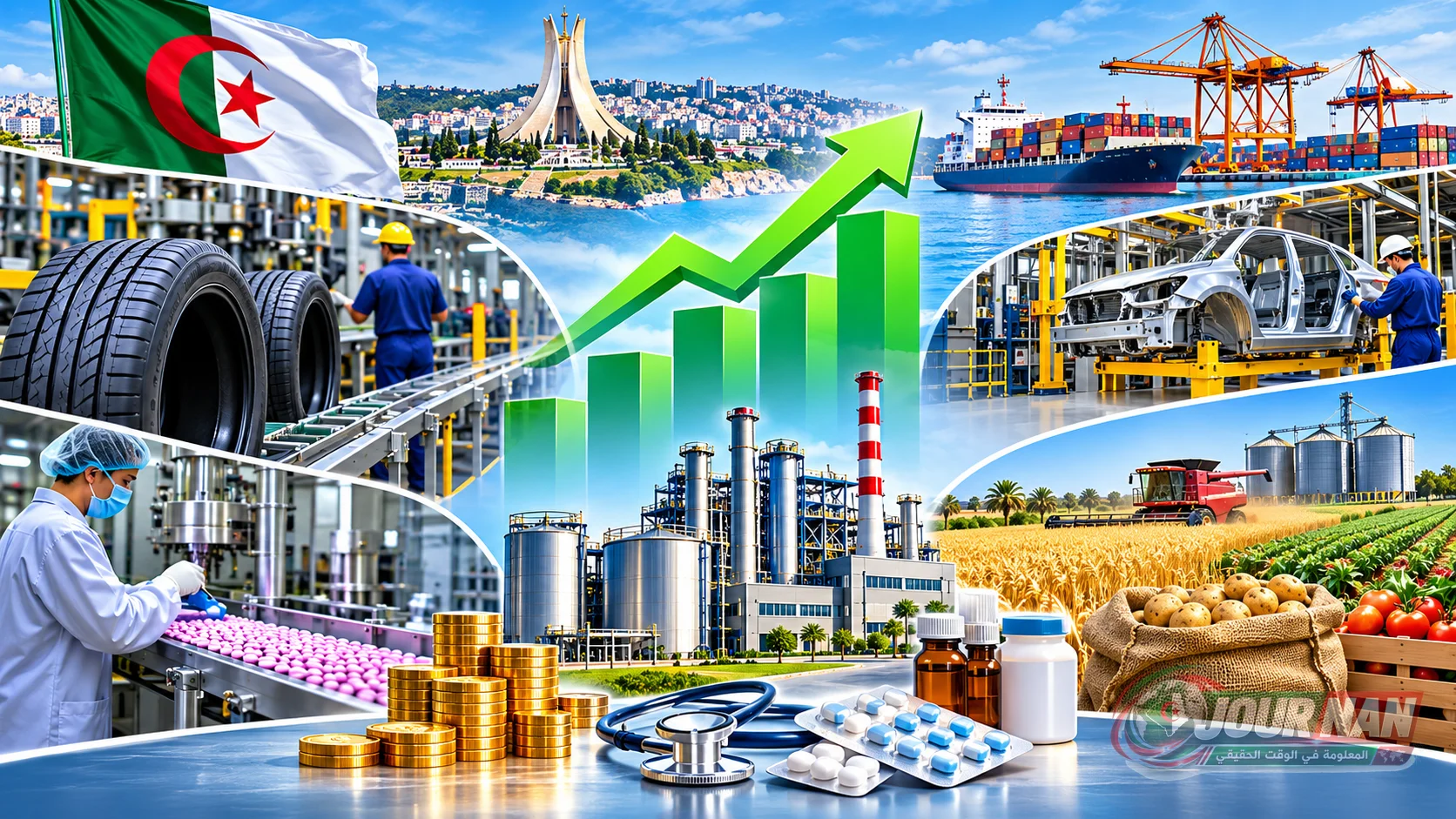
In recent years, Algeria has achieved significant gains in reducing the import bill and stimulating local production, as many goods are now manufactured and produced locally after having been the exclusive domain of foreign markets. However, this transformation, despite its strategic importance, has collided with a field reality that citizens suffer from daily and that occupies the minds of economic operators; its features are summarized by the duality of "noticeable price hikes" and "fluctuation in quality levels". How can Algeria move from the stage of "quantitative self-sufficiency" to that of "true economic competitiveness"?
Building competition... the key to breaking monopoly: An elementary economic rule confirms that the presence of a single factory or a very limited number of operators to produce a sensitive or strategic material – such as the car tire industry or other equipment – automatically generates a situation of "quasi-monopoly". This situation weakens the incentive to improve quality and leaves the consumer hostage to limited choices and high prices. The practical solution here lies not in restricting production, but in expanding its circle by encouraging multiple investments, both local and foreign. Opening the door to the creation of a second, third, and fourth factory will create real competitiveness in the market, and at that point, companies will automatically find themselves forced to raise quality standards and lower prices to attract the consumer, who will become the master of the situation.
Bureaucracy and licenses: the hidden enemy of serious investment: Despite the existence of enormous human energies and serious national businessmen who possess the desire and the financial and investment capacity, the specter of complex bureaucracy and the slowness in granting licenses still form the insurmountable barrier to real take-off. Encouraging free economic initiative and removing administrative obstacles is not a luxury, but a condition of survival for any economy seeking to attract capital. Digital administration, transparency, and the stability of laws are the only ones capable of unleashing market energies and creating an environmental climate dominated by trust and fair competition.
Pharmaceutical industry and health security: the partnership of the giants to ensure quality: The pharmaceutical and drug manufacturing sector represents a fundamental pillar of the country's national security. Despite the positive steps taken in local production, the Algerian patient's ambition remains legitimate regarding obtaining medicines that meet the specifications of the standards of major global companies (Big Pharma), especially for chronic and delicate diseases. The solution lies in attracting global pharmaceutical industry giants to invest directly in Algeria, according to terms of reference that guarantee technology transfer and the localization of scientific research, thereby integrating global expertise with national capabilities and ensuring the citizen safe and high-quality medicine.
Food security and crisis management: intelligent storage as a protective shield: Every season, temporary crises repeat themselves affecting widely consumed products, such as "potatoes" for example; these crises are not due to a deficit in the agricultural production of the Algerian land, but are rather related to shortcomings in cold chains, storage, and proactive planning. Here, the urgent need arises to create a "strategic investment fund" or an intelligent intervention by the State that relies on encouraging investment in large cold storage facilities, so that the State – or in partnership with the private sector – buys abundant harvests directly from the farmer to protect him from loss, and stores them to ensure market supply and regulate prices in the event of any shortage or artificial rise. The current economic challenges in Algeria are not insurmountable; the problems are known and the solutions simpler than imagined, but the lesson always lies in bold field execution. Breaking the chains of bureaucracy, unleashing initiatives, and encouraging honest competitiveness through real investment funds are the only ways to turn challenges into opportunities and achieve an economic take-off that serves the citizen and revives the national market.