Hydraulic Sector: Minister Bouzegza Leads Meeting to Follow Up on Wastewater Treatment Plant Projects
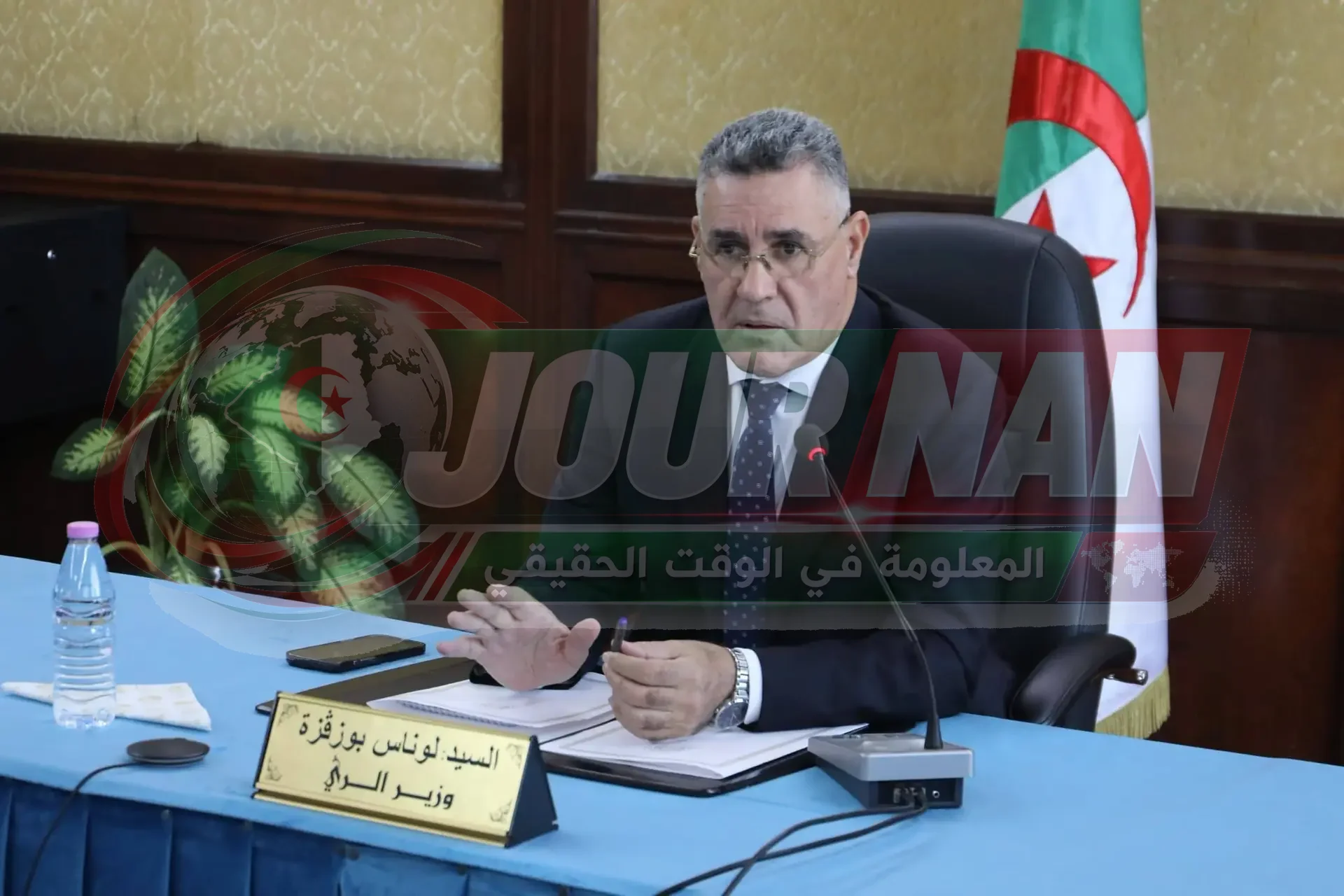
The Minister of Hydraulics, Lounès Bouzegza, chaired an evaluation meeting dedicated to monitoring the progress of construction and rehabilitation projects for wastewater treatment plants across various wilayas of the country. Held on Monday via videoconference at the ministry's headquarters in the presence of central administration officials, general managers of affiliated companies, and directors of hydraulics, the meeting focused on the necessity to redouble efforts and accelerate the pace of ongoing projects to enable the commissioning of several facilities before the end of the year 2026. According to a ministry statement, this gathering falls within the framework of implementing the directives of the President of the Republic, Mr. Abdelmadjid Tebboune, regarding the valorization of treated wastewater and the expansion of its recovery and reuse. The meeting also forms part of the periodic monitoring of programs outlined in the field of sanitation and wastewater treatment, as well as the review of project execution levels and obstacles hindering their implementation, with the aim of bolstering national treatment capacities and mobilizing an additional water resource to meet development needs, particularly in the agricultural sector. The minister listened to detailed presentations on the status of various projects, including the construction of new plants, the rehabilitation and extension of existing facilities, progress rates, technical, administrative, and financial difficulties encountered, and the measures taken to address them. In this context, Mr. Bouzegza issued a series of instructions aimed at enhancing the recovery capacities of treated wastewater to achieve the target set at 60%, in accordance with the President's guidelines, accelerating the pace of ongoing projects with a view to receiving and commissioning several of them before the end of the current year, and immediately addressing recorded constraints, the statement specifies. He also stressed the need to strengthen coordination between directors of hydraulics and concerned entities to ensure adherence to fixed deadlines, provide rigorous and permanent monitoring, improve the performance of existing treatment systems, and guarantee their operation in compliance with current technical and environmental standards. The minister highlighted the necessity of continuing efforts to improve the quality of treated water and working toward expanding and generalizing the tertiary treatment system to provide water suited for various uses, particularly in agriculture. The hydraulic sector possesses 237 sanitation systems distributed across different regions of the country, with a theoretical treatment capacity estimated at 1.12 billion cubic meters per year, while the ongoing program includes 76 new sanitation systems that will increase overall treatment capacities to 1.514 billion cubic meters per year once completed and operational. Additionally, a new program registered for the year 2027 provides for the construction of nine (9) new wastewater treatment plants, alongside ongoing projects aimed at rehabilitating and expanding 26 plants, and introducing the tertiary treatment system in 25 plants to enhance treated water quality and broaden its reuse for agricultural irrigation.